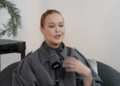

Chinese medicine and longevity are the focus of this conversation with Dr Vivian Tam, who holds a Doctorate in Chinese Medicine and a Bachelor’s in App.Sc in both Chinese Medicine and Human Biology. She is the principal practitioner at Melbourne’s Cosmetic Acupuncture clinic, a registered practitioner under the Australian Health Practitioner Regulation Agency (AHPRA) and an accredited member of the Australian Acupuncture and Chinese Medicine Association, with a particular interest in skin and hormonal health.
We talked about how Chinese medicine thinks about ageing, why it puts prevention first, what happens in a consultation, how cosmetic acupuncture works on the face, the idea of warming and cooling foods, and why she wants people to take herbs and supplements under a registered practitioner’s care.
Listen to the episode
- Listen on Omny
- Ageless Radiance Club on Apple Podcasts
- Ageless Radiance Club on Spotify
- All Ageless Radiance Club podcast episodes
How does Chinese medicine think about longevity?
Dr Vivian Tam says longevity in Chinese medicine is about helping the body age as well as it can, and that for her the measure is quality of life, not the number of years.
Longevity for me is not how long can I live to, but how can I improve my quality of life for as long as possible.
Dr Vivian Tam
From 2:59 she explains that the culture she grew up in pays attention to the small signs of ageing that Western society often accepts as normal. An older woman who is a little out of breath, tired or stiff getting out of bed would, in her tradition, prompt the question of why, and what could help her move and feel better.
Prevention sits at the centre of that view. From 4:53 she says Chinese medicine can be used for acute problems, but its concept is to look after people while they are well.
The concept of Chinese medicine is let’s look after you when you’re not unwell, so that we don’t even have to think about it.
Dr Vivian Tam
Food is part of this. From 5:24 she describes food as fuel for a good, long life, not only for the day’s energy. As a child at Chinese school, she remembers her teachers carrying clear glass jars of tea with herbs and berries floating in them, which she later learned were traditional teas women drank around menopause. In her family, she says, these conversations were never taboo: a mother or auntie would simply suggest a tea once you reached your forties.
What do yin and yang mean in Chinese medicine?
Dr Tam describes yin and yang as the two halves of a balance the body is always trying to keep: yang is the hot, the sun; yin is the cooling, the moon or water.
From 6:51 she explains how Chinese medicine views menopause through this lens. As yin declines, the part that keeps the body cool falls away, which is how the tradition describes heat symptoms such as hot flushes, sweating and dryness. She stresses that the aim is never to stop menopause, because it is a normal physiological stage, but to support a woman through it.
From 29:24 she adds that age changes how a practitioner reads the same signs. Declining yin at 50 makes physiological sense and is supported; the same pattern at 21 would be treated as an imbalance to correct.
What happens in a Chinese medicine consultation?
Dr Tam says a consultation looks at the whole person, whatever the reason for the visit, and relies heavily on conversation, the tongue and the pulse.
From 21:57 she explains that a period problem, for example, is not viewed as a reproductive issue alone. She will ask about digestion, circulation and bowel habits to build the bigger picture. The tongue is read as an internal reflection: a thick coating, she says, usually suggests the digestive system is not clearing well. The pulse is assessed for speed, strength and quality.
She also clarifies a point that confuses many people. From 19:11 she says that when a Chinese medicine practitioner talks about the liver or spleen, they mean a system or function in the body, not the physical organ. A “sluggish liver” in Chinese medicine terms does not mean a liver scan would show anything wrong. In the tradition, the liver keeps qi, the body’s energy, moving freely, and the spleen governs digestion.
Asked about blood and stool tests, from 23:40 she says most of her patients arrive with results from their GP. She takes them into account, though Chinese medicine does not rely on them. She also tells patients they can keep other treatments they find helpful: from 31:46 she says she is not the kind of practitioner who asks people to stop everything else, including hormone therapy.
How does cosmetic acupuncture work on the face?
Dr Tam says facial acupuncture works on the face and the body together, and that in the face the needles bring blood circulation, nutrients and oxygen to the area.
From 11:01 she describes the needles used in her clinic as ultra-fine, Japanese-made facial needles, so thin that around ten would fit inside a standard injection needle. Depending on what a patient wants, she says, she can work at skin level, on the soft tissue or on the muscles beneath. A muscle held tight from frowning can be released, and a droopy muscle can be targeted to encourage tone.
From 13:54 she says acupuncture can be combined with anti-wrinkle injections and fillers, provided the practitioner knows how to work around treated areas. In her view they do different jobs, so one does not replace the other. She sees it as an option for people who are hesitant about injectables or lasers.
I shared my own experience here: an acupuncture facial with a visiting Chinese medicine practitioner at a retreat in Thailand is the only facial that has ever changed my face in a way I could see, with a slimmer jawline and fresher eyes.
Why does Chinese medicine favour warm, cooked food?
Dr Tam’s first and simplest tip is to eat warm, cooked food, because in Chinese medicine foods are warming or cooling by their nature, not by their temperature.
From 36:51 she uses ginger as her example. Pickled ginger straight from the fridge is cold to touch, but it is still a warming food. Peppermint tea is served hot, yet it is cooling. From 38:30 she explains that raw food may carry more nutrients, but in Chinese medicine thinking the body’s “digestive fire” has to work harder to process it, so she favours stewed, steamed, lightly stir-fried or cooked food. That is why, she says, ginger appears in so much Chinese cooking, and why tomatoes, cucumber and even lettuce are often stir-fried.
Are Chinese herbs and supplements safe to take on your own?
Dr Tam’s answer is to be under the care of a registered practitioner, because herbs and supplements are powerful and the wrong choice can do harm.
My first advice will always be to be under the care of a practitioner, because they’re the people that really know what they’re doing.
Dr Vivian Tam
From 42:01 she pushes back on the idea that herbal medicine is always slow or gentle. Because it can change the body, she says, it can also go wrong, which is why self-prescribing on the strength of a social media post or a friend’s habit worries her.
A lot can go wrong if you’re given the wrong thing.
Dr Vivian Tam
She names ginseng (from 44:38), reishi and cordyceps mushrooms, chrysanthemum tea and goji berries as herbs with a long history in Chinese medicine, which the tradition describes in terms of stress, nourishing yin or soothing the liver. On ginseng she adds a caution: it is only useful if it suits the person’s body, so people should not rush out to buy any ginseng they find. For beauty more broadly, from 45:20 she returns to sleep and stress.
Always look from the inside out.
Dr Vivian Tam
Can you use acupressure and gua sha at home?
Dr Tam says gua sha is an ancient Chinese medicine tool, traditionally made from stone, tusk or bone, used for lymphatic drainage and circulation, and the stone gives far more leverage than a fingertip.
From 53:03 she explains that the strokes seen on social media move towards the lymph nodes, behind the ears and towards the armpits, so the direction is always up and out. She also shows yintang, the point between the eyebrows, which she uses for calming the mind when it will not switch off, and the points beside the nostrils, which she uses for de-puffing. From 58:58 she describes belly breathing, drawing the breath into the abdomen without lifting the chest, as a way to signal the body to slow down.
How do you find a registered Chinese medicine practitioner in Australia?
Dr Tam says to look for a practitioner registered with AHPRA, the Australian Health Practitioner Regulation Agency, which now registers Chinese medicine practitioners nationally.
From 1:00:17 she explains that registration was once handled state by state, for example through a Victorian board, before it moved to national registration. AHPRA has a practitioner search, and you can also ring a local clinic and ask who they are registered with. Her broader advice applies to any practitioner: ask questions, and if you are not getting the care and attention you need, change practitioners.
Key takeaways
- Dr Tam says Chinese medicine measures longevity by quality of life and puts prevention first.
- Yin and yang describe a balance of cooling and heating; menopause is seen as a normal stage to be supported, never stopped.
- When a practitioner refers to the “liver” or “spleen”, they mean a body system or function, not the physical organ.
- Facial acupuncture uses ultra-fine needles to work on skin, soft tissue and muscle, and can sit alongside injectables if the practitioner knows the treated areas.
- Her simplest daily tip is warm, cooked food.
- Herbs and supplements are powerful: take them under a registered practitioner, not because of social media or a friend.
- In Australia, check a practitioner’s registration with AHPRA.
About Dr Vivian Tam
Dr Vivian Tam holds a Doctorate in Chinese Medicine and a Bachelor’s in App.Sc in both Chinese Medicine and Human Biology. She is the principal practitioner at Melbourne’s Cosmetic Acupuncture clinic and the founder of Zilch Formulas. She is a registered practitioner under the Australian Health Practitioner Regulation Agency and an accredited member of the Australian Acupuncture and Chinese Medicine Association, and she is known for her seminars across Australia.
For more on this tradition, read Dr Marina Christov on traditional Chinese medicine and seasonal energy lows.
Read more: How Chinese Medicine Can Restore Wellbeing In Your Hectic Lifestyle.
This conversation is general information, not medical advice. Speak to your own doctor about your situation.